
What does an adjuster do for your home insurance?

An adjuster plays a crucial role in the context of home insurance claims. When you experience damage to your home or property covered by your insurance policy, an adjuster is assigned by your insurance company to evaluate the extent of the damage and determine the amount of compensation you are entitled to receive. Here are the primary responsibilities of a home insurance adjuster:

Damage Assessment: The adjuster visits your property to assess the damage caused by an insured event such as a fire, storm, water leak, or vandalism. They examine the affected areas, document the extent of the damage, and take photographs or videos as evidence.

Investigation: The adjuster investigates the cause of the damage and determines whether it falls under the coverage outlined in your insurance policy. They review the policy terms, conditions, and exclusions to ascertain the applicability of the claim.

Documentation: The adjuster helps you with the paperwork required for your claim. They assist in completing claim forms, gathering necessary documents, and providing guidance on any additional information or evidence needed to support your claim.

Estimation of Loss: Based on their assessment of the damage, the adjuster prepares an estimate of the cost required for repairs or replacement. They consider factors such as labor, materials, and local market rates to determine the value of the loss.

Support and Guidance: Throughout the claims process, the adjuster serves as a source of information and guidance. They answer your questions, address concerns, and help you understand the terms and procedures involved in the insurance claim.

It’s important to note that there are different types of adjusters, including company-employed adjusters, independent adjusters, and public adjusters. Their roles and responsibilities vary based on their affiliation and the specific circumstances of your claim.

To get a quote or discuss how we can help you with choosing your home insurance provider, call us at (800) 234-2103 or get a free 30 second quote on westernmutual.com.

How to Create a Thorough Home Inventory

Having a complete home inventory is crucial for protecting your assets in case of fire, theft, or natural disasters. A well-documented inventory helps ensure you receive full compensation from your insurance provider. One of the best ways to make your inventory more effective is by including video documentation. In this guide, we’ll walk you through the step-by-step process of creating a home inventory that covers everything an insurer might need. 

Why You Need a Home Inventory 

A home inventory serves as proof of ownership, helping you: 

-Accurately file insurance claims. 

-Determine the right amount of coverage for your belongings. 

-Speed up the claims process in case of loss. 

-Provide documentation for tax or estate purposes. 

Step 1: Choose a Home Inventory Method 

There are several ways to organize your home inventory: 

Home inventory apps – Apps like Sortly, Encircle, or Nest Egg help categorize and store digital records. 

Spreadsheets – A simple Excel or Google Sheet can be used to log item details, including value and receipts. 

Notebook & Folder – A handwritten inventory can be paired with printed receipts and photos stored in a safe place. 

Step 2: Go Room by Room 

Organizing your inventory room by room ensures that you don’t miss anything. Start with the most valuable or high-risk items, such as electronics, appliances, and jewelry, and then move on to everyday household items. 

What to Record: 

-Item name 

-Description (brand, model, serial number) 

-Purchase date & location 

-Estimated or actual value 

-Receipts or appraisals (if available) 

Step 3: Take Photos and Videos 

Visual documentation adds extra credibility and proof of ownership. Here’s how to do it right: 

Taking Photos: 

-Capture close-ups of high-value items. 

-Photograph model numbers and serial labels. 

-Group items together for context (e.g., a bookshelf with all its contents). 

Recording a Video Walkthrough: 

-Walk slowly through your home, recording every item. 

-Verbally narrate details about expensive belongings. 

-Capture the condition of furniture and fixtures. 

Step 4: Store Your Inventory Securely 

Your home inventory should be protected to ensure it’s accessible when needed. 

-Save to Cloud Storage – Use Google Drive, Dropbox, or iCloud for easy access. 

-Keep a Physical Copy – Store printouts in a fireproof safe or off-site location. 

-Share with a Trusted Person – Consider sharing a copy with a family member or insurance agent. 

Step 5: Update Regularly 

Your home inventory is only useful if it remains accurate. Set a reminder to: 

-Update it annually. 

-Add new purchases as you acquire them. 

-Remove old or donated items. 

Final Thoughts 

Taking the time to create and maintain a home inventory can save you significant stress and financial loss in the future. By including photos, receipts, and especially video documentation, you provide the most compelling evidence for insurance claims. If you haven’t started your home inventory yet, now is the perfect time to begin! 

Visit us online at WestenMutual.com

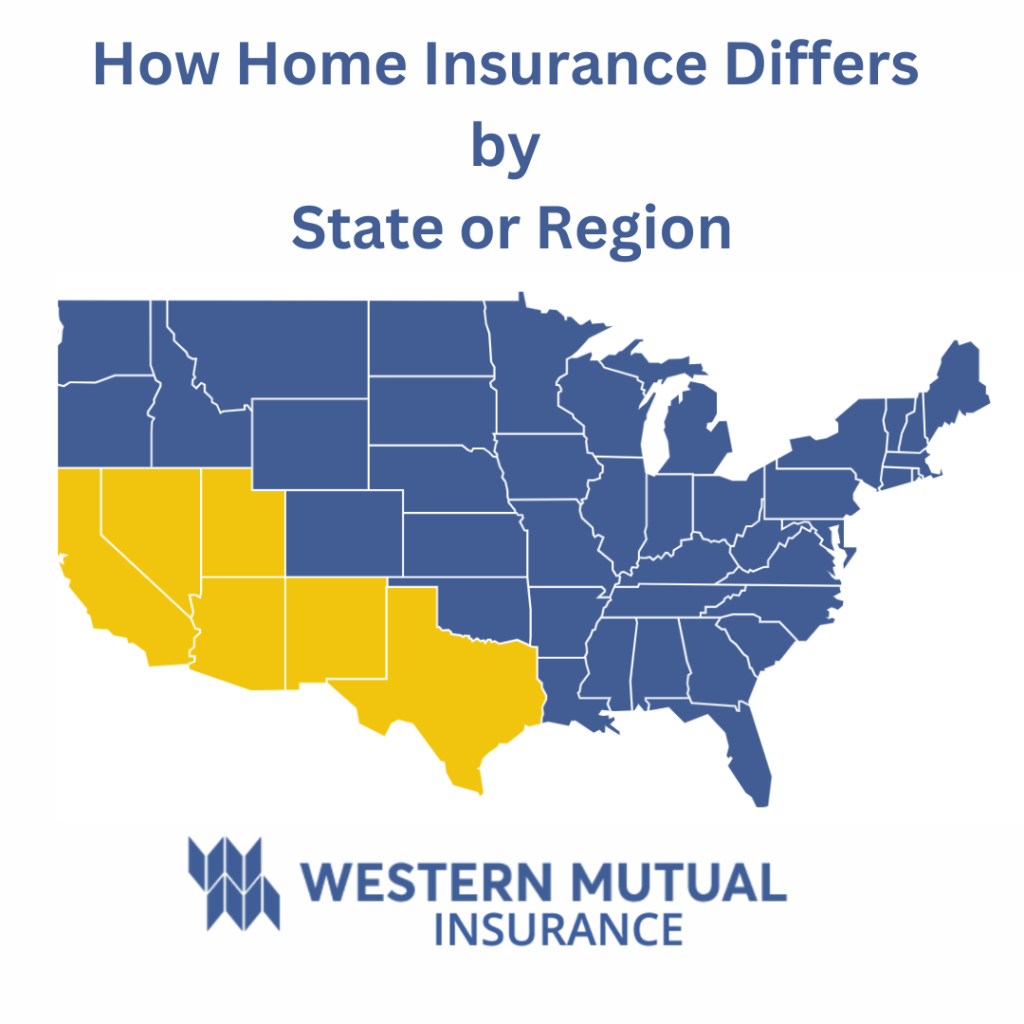
How Home Insurance Differs by State or Region

Home insurance varies significantly by state or region due to differences in geography, climate, local regulations, and risk factors. Here are the key factors that contribute to these variations: 

1. Geographic Risks 

Natural Disasters: States prone to specific disasters often have higher premiums or require additional coverage: 

Hurricanes and Flooding: Coastal states like Florida, Texas, and Louisiana often have higher rates due to hurricane risks. Policies may require separate windstorm or flood insurance. 

Earthquakes: States like California and Alaska may require earthquake insurance, which is typically not included in standard policies. 

Wildfires: High-risk areas like California, Oregon, and Colorado often see higher premiums or reduced availability due to wildfire exposure. 

Tornadoes: States in Tornado Alley, such as Oklahoma and Kansas, might have specific endorsements for wind and hail damage. 

2. State-Specific Regulations 

Coverage Requirements: Some states mandate specific types of coverage or insurance limits, affecting pricing and policy offerings. 

Insurance Regulation: States like New York may have stricter consumer protection laws, impacting how policies are priced, and claims are processed. 

State Insurance Pools: In high-risk areas, states may offer special programs, like Florida’s Citizens Property Insurance Corporation, for homeowners unable to find coverage on the private market. 

3. Cost of Construction and Materials 

Areas with higher labor costs or more expensive materials (e.g., urban areas like New York or California) may have higher premiums. 

Regional building codes can influence costs; for instance, hurricane-prone areas may require more robust construction. 

4. Crime Rates 

High-crime areas may face increased premiums due to higher risks of theft or vandalism. 

5. Market Competition 

States with a larger number of insurance providers tend to have more competitive rates. Conversely, areas with fewer providers may see higher costs due to limited options. 

Examples of Regional Differences: 

Region Key Factors Affecting Insurance 

Northeast: Snow damage, older homes, high rebuilding costs 

Southeast: Hurricanes, flooding, high humidity risks (mold) 

Midwest: Tornadoes, hail, flooding near rivers 

West Coast: Earthquakes, wildfires, high property values 

Mountain West: Wildfires, snow damage, lower population density 

Southwest: Drought, heat damage, flash flooding 

Understanding these differences can help homeowners select appropriate coverage and budget for insurance expenses effectively.  

Visit us online at WestenMutual.com.

Should I Shop for Home Insurance During Escrow?

Yes, it’s a good idea to start shopping for home insurance during the escrow process. Home insurance is a crucial component of protecting your investment, and having coverage in place is often a requirement from mortgage lenders.

Here are some reasons why you should consider shopping for home insurance during escrow:

Lender Requirement: Most mortgage lenders require proof of insurance before they finalize your loan. They want to ensure their investment is protected in case of unforeseen events like fire, theft, or natural disasters.

Closing Requirements: Home insurance is typically needed to close the deal. Sellers may also want assurance that the buyer has insurance coverage in place, especially if there’s a gap between closing and when the buyer moves in.

Coverage Options: Shopping for insurance early allows you to explore different coverage options and find the policy that best fits your needs and budget. This can take some time, and it’s better to have this sorted out before the closing date.

Avoid Last-Minute Stress: Securing insurance during escrow helps avoid any last-minute rush or stress. It ensures that everything is in order and ready for the closing process.

When shopping for home insurance, consider factors such as coverage limits, deductibles, liability coverage, and any additional coverage you may need for specific risks in your area. It’s advisable to get quotes from multiple insurers to compare prices and coverage options. Be prepared to provide information about the home, such as its size, age, construction materials, and any safety features.

Consult with your real estate agent and mortgage lender to understand their requirements and deadlines and ensure a smooth transition from escrow to homeownership.

Visit us online at WestenMutual.com
D.I.Y Car Wash

It’s probably been weeks since you last washed your car, maybe even moved it. And on top of that your go to car wash place may be closed but you now have all the time to do it yourself. Here are some D.I.Y tips on how to get your car sparkly clean as if just came out of the wash tunnel;

  1. Start by cleaning the inside of your car first, vacuuming mats, seats and trunk. To maintain a fresh scent place dryer sheets under each floor mat for a continuous clean smell
  2. Don’t have any Armor-All to wipe the dashboard? No worries, mix equal parts water and baby oil and add a tablespoon of white vinegar. Spray onto paper towels and watch your interior shine
  3. When cleaning your window’s run a piece of lemon across the glass first, it will remove dried tree sap, sticky fingerprints and much more. Then apply your window cleaner and wipe away with newspaper for a streak free shine
  4. Foggy head lights? Squeeze some toothpaste onto a moist rag and rub onto headlight vigorously, then just wash away
  5. Use the same mixture you made for your tires for a nice glossy finish
  6. Try to wash your car in a shaded area and wash it in sections, this will allow you time to wipe it down properly and avoid getting dried water marks from the sun

We hope these tips and tricks help you getting that car looking like new again!

WM-DIY-Car-Wash_5.29.20WM-Quote-Button-2

Western Mutual Website

Did you know?

That on the Western Mutual website you can request, resolve or view many of the documents and/or questions you had in regards to your policy. That’s right! No more delay of waiting on hold or having to memorize a phone number. Simply visit the website and you can have access to view your coverages, pay your premium, request a change or even ask to suspend coverage all with a click of a button.

Online you’ll find many resources available to you as well like our Frequently Asked (FAQ) page with several common concerns, answered right on your screen. You can even check our media page with weekly informative blogs.

Visit www.Westernmutual.com and let us know what you think.

WM-Web-Info_5.27.20WM-Quote-Button-2

Affinity by Western Mutual

We are happy to announce that our Affinity department is now serving the states of Nevada and Texas.

Affinity specializes in working directly with mortgage professionals in helping them obtain homeowners insurance for their clients. Our online, 24 hour and completely free program will ensure that there are no more escrow delays.

Don’t believe us? Let one of our reps stop by and show you how easy it is, or you can call our office if you have any questions.

Office phone number: 1-800-234-3659

Nevada – Agent: Kalaun S. ext: 5374

Texas – Agent: Crystal P. ext: 5399

WM-AFF-TX_3.23.20wm-quote-button

Emergency Claim Assistance

If you are experiencing a claims emergency during our closed office hours, please call our after-hours claims line immediately at 1-866-926-2142. A claims representative will contact you and explain the process so that we can resolve the situation as soon as possible. If you have more questions about our claims process or how to file, visit our website at https://www.westernmutual.com/claims

WM-Claim-Line_2.19.20wm-quote-button

Do I Have Homeowners Insurance or Warranty?

Many people wonder who to call if something happens to their home that needs to be assessed, inspected or repaired due to damage. However, what company to call is the most important to know since home warranty is completely different then homeowner’s insurance.

A simple way to describe it is that your insurance company such as Western Mutual protects your home from things that MIGHT happen. This includes things like fire, theft, vandalism and natural disasters except earthquake and flooding as not all homes are susceptible to those perils.

Home warranty on the other hand is optional and protects you from baring the entire expense of repairing or replacing home appliances and system components in the event that they break down. As stated, home warranty is optional and protects you, while home insurance protects your property from potential hazards.

We hope this helped you out for any future occurrences.

WM-Ins-or-Warranty_1.27.20

wm-quote-button

Simple Ways to Prevent Losses

According to the Insurance Information Institute’s latest report about 1 in every 50 homes will file an insurance claim each year. The two reasons topping the chart as the most common losses are wind plus hail and water damage, followed by property damage and theft.  Some losses may be at least partially preventable.

We would like to provide some tips and info on how you could potentially avoid a claim in the coming year.

  • Check all water line connections; this includes appliances in your kitchen, bathroom, wash room and outside hose attachments
  • Inspect all drainage and vents of your home, make sure to sweep out and flush exterior gutters, degrease and clean range hoods as well as unclogging sink/tub drains monthly
  • Trim trees around the home that could potentially cause damage to the siding of your roof, upkeep your lawn and check the sprinkler system
  • Check exterior home for areas that show cracks or need to be repainted and refinished as needed
  • Inspect roof for loose or missing shingles, hire a licensed contractor to repair any damage and keep proof of completed work
  • Install a Wi-Fi Water Detector.  Wi-Fi Water Detectors, particularly those that automatically shut off the water supply to your home if they detect inconsistency in the flow of water, may reduce – or even eliminate – significant water leaks.  We have partnered with FLO Technologies to offer you half off a FLO by Moen device – with free installation!  Visit www.meetflo.com/western-mutual for more information.  If you elect to use another Wi-Fi Water Detection System with automatic water shutoff, we will reimburse you up to $200 for the cost of the system. You may also be eligible for a policy discount when you install a Wi-Fi Water Detection system.

    B702C891-C89F-4BCC-8E15-9D74DAD2B19B

wm-quote-button